
Blog
Water Meter Readings: How to Track Your Usage

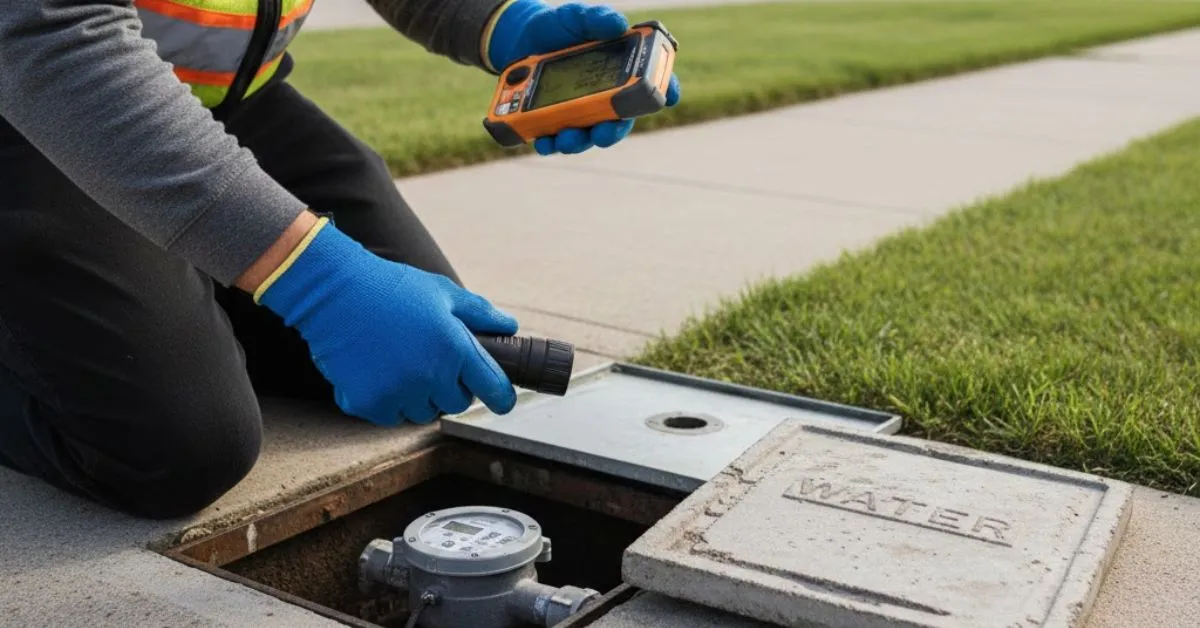
If your bill has been creeping up, the fastest way to take control is to learn water meter reading and track your own consumption between statements. Your meter is the single source of truth for how much water flows through your property no estimates, no guesses. In this guide, you’ll find where to locate the meter, how to read cubic feet (or gallons), and simple ways to track consumption so you can catch leaks early, verify billing, and stay within lower pricing tiers.
Along the way, we’ll also explain how meter data interacts with different utility models Public vs Private Water so you understand how rate approval, support, and service may affect any meter-related questions you bring to a Municipal Provider or Private Company.
Find It First: Meter Location
Before anything else, identify your Meter Location:
- Curb/Street Box: Most single-family homes have a meter in an underground box near the curb. Lift the lid carefully (a screwdriver helps) and avoid disturbing wiring or transmitter equipment.
- Basement or Utility Room: In colder regions, meters are installed indoors to prevent freezing, typically where the main line enters the home.
- Shared or Multi-Unit Buildings: Your meter may be in a locked equipment room. Ask building management to confirm which meter number corresponds to your unit.
Tip: Write down your meter serial number (stamped on the dial or digital face). It’s useful when speaking with your provider especially if you’re clarifying service details with a Municipal Provider or Private Company.
How To Read Cubic Feet (Or Gallons)
Meters measure volume in either cubic feet (CF) or gallons (GAL). The most common residential format is CF, and utilities convert that to CCF (hundreds of cubic feet) on the bill.
Analog Dials (Odometer-Style)
- Read left to right.
- Record black digits (they represent whole units billed: CF or CCF).
- Ignore fixed decimal or rotating sweeps for everyday tracking; those indicate fractions of a unit.
Example:
Reading = 001236 CCF → That’s 123,600 cubic feet total to date (1 CCF = 100 CF).
Digital Registers
- Toggle the button to cycle through screens until you see TOTAL or FLOW.
- Note the unit label (CF, CCF, or GAL). Record the entire number.
Key Conversion:
1 CCF ≈ 748 Gallons. If your bill is in gallons but your meter is in CCF, multiply CCF by 748.
Daily And Weekly Tracking: Build a Simple Routine
To Track Consumption, consistency beats complexity. Try this:
- Pick a Time: Record the meter once per day at the same hour (e.g., 7:00 a.m.).
- Log The Reading: Use your phone notes or a spreadsheet; note date, reading, and unit.
- Calculate Usage: Subtract yesterday’s reading from today’s to get daily usage.
- Flag Spikes: Any big jump (with no obvious cause like irrigation or guests) deserves investigation.
Pro Tip: Track for a full billing cycle at least once. You’ll create a personal baseline and can compare it to the utility’s billed usage helpful with both Public vs Private Water providers when validating meter-to-bill accuracy.
Leak Check In Five Minutes
A fast, no-tools method:
- Turn Off All Fixtures/Appliances (including ice makers and irrigation).
- Record the Meter.
- Wait 15 Minutes.
- Recheck the Meter.
- If the number moved, you may have a hidden leak (toilet flapper, slab line, irrigation valve).
This test saves time when you’re on hold with customer service having data ready speeds up support with either a Municipal Provider or a Private Company.
Using Meter Data To Control Bills
Your meter is the best budgeting tool you have. Put it to work:
- Set a Monthly Target: If your bill tiers increase at 6,000 gallons, aim for ≤ 5,500 gallons. Track weekly to stay on pace.
- Find Water-Intensive Days: Laundry and lawn days will show up as spikes. Shift or split activities to smooth usage and avoid crossing into higher-priced tiers.
- Verify Irrigation Schedules: A meter jump overnight usually means outdoor watering is outpacing expectations or a zone is stuck open.
When The Math Doesn’t Add Up
Sometimes your personal log and your bill disagree. Here’s how to troubleshoot:
- Unit Mismatch: You tracked CF, but the bill shows CCF or Gallons. Convert correctly (1 CCF = 748 Gal).
- Read Date Window: Your tracking period might not perfectly match the utility’s billing window.
- Multiple Meters: Confirm the serial number on your physical meter matches the number on your bill, especially in duplexes and townhomes.
- Transmitter Lag: AMI/AMR radio-transmitted meters occasionally delay data. A Private Company may push data to a customer portal faster than a Municipal Provider, but both should reconcile to the register.
If a discrepancy remains, request a Meter Accuracy Test. If you’re under a Public vs Private Water model, ask who handles Rate Approval and billing disputes; public systems often have formal appeal procedures, while private operators may escalate via a customer relations team.
Seasonal Patterns: What’s “Normal” Usage?
A quick frame of reference (typical single-family home):
- Winter Baseline: Lowest indoor-only usage showers, toilets, cooking, laundry.
- Spring/Fall: Moderate increases from gardening and pressure washing.
- Summer Peak: Outdoor irrigation can double or triple daily totals.
Use your meter to separate Indoor vs Outdoor. Take a reading at bedtime and again before the morning irrigation cycle begins; repeat after irrigation finishes. The difference is your overnight indoor usage; the irrigation cycle tells you outdoor demand precisely.
Pair Meter Tracking With Conservation Wins
Small changes show up fast on your meter:
- Toilet Flapper Replacement: Often saves 200–1,000 gallons/week.
- Low-Flow Showerheads: Cut shower volume by 25–40%.
- Shorter Showers: Two minutes less per person can reduce hundreds of gallons monthly.
- Mindful Watering: Drip irrigation and soil moisture sensors reduce outdoor spikes.
Because you’re measuring at the source, you’ll see the impact within 24 hours motivating for households aiming to stay below tier thresholds.
Customer Service: Who To Call For What
- Billing Questions / Reading Schedules: Start with customer service.
- Hardware Issues (Stuck Register, Broken Lid, Frozen Pit): Request a field check.
- Suspected Leak On Utility Side: Utility dispatch should inspect the service line up to the meter.
- Suspected Leak On Customer Side: A licensed plumber can pressure-test your home’s internal lines.
Public systems may require a formal work order via your Municipal Provider, while a Private Company might route through an app or portal. Either way, keep your meter logs; they’re your evidence.
Public vs Private Water: Why It Matters To Your Meter
- Municipal Provider: Often follows standardized schedules for meter reads, formalized dispute paths, and public Rate Approval.
- Private Company: May offer near real-time usage dashboards (Advanced Metering Infrastructure) and faster tech support useful for day-by-day Tracking Consumption.
The better the access you have to interval data, the easier it is to prevent tier overages and surprise bills.
Check out the Water Page today to learn how to read your meter, track usage in real time, and compare providers that offer transparent tools and responsive service.
Final Thoughts
Mastering water meter reading turns guesswork into control. Once you know your Meter Location, understand how to Read Cubic Feet, and set a weekly routine for Tracking Consumption, you can validate bills, pinpoint leaks, and keep usage below costly tier thresholds. And if questions arise, you’ll have clear, time-stamped data when you contact your provider public or private about service or billing.
With a few minutes of logging each week, you’ll protect your budget, conserve a critical resource, and make smarter decisions about everything from irrigation schedules to fixture upgrades.
Stay Ahead Of Utility Costs
Make your usage visible and predictable. Visit Get Home Utilities’ Water Page to access step-by-step meter guides, compare tools from Municipal Providers and Private Companies, and keep your home’s water costs in check.